
Real Estate AI Is Shifting From Content Generation to Agentic Deal Support
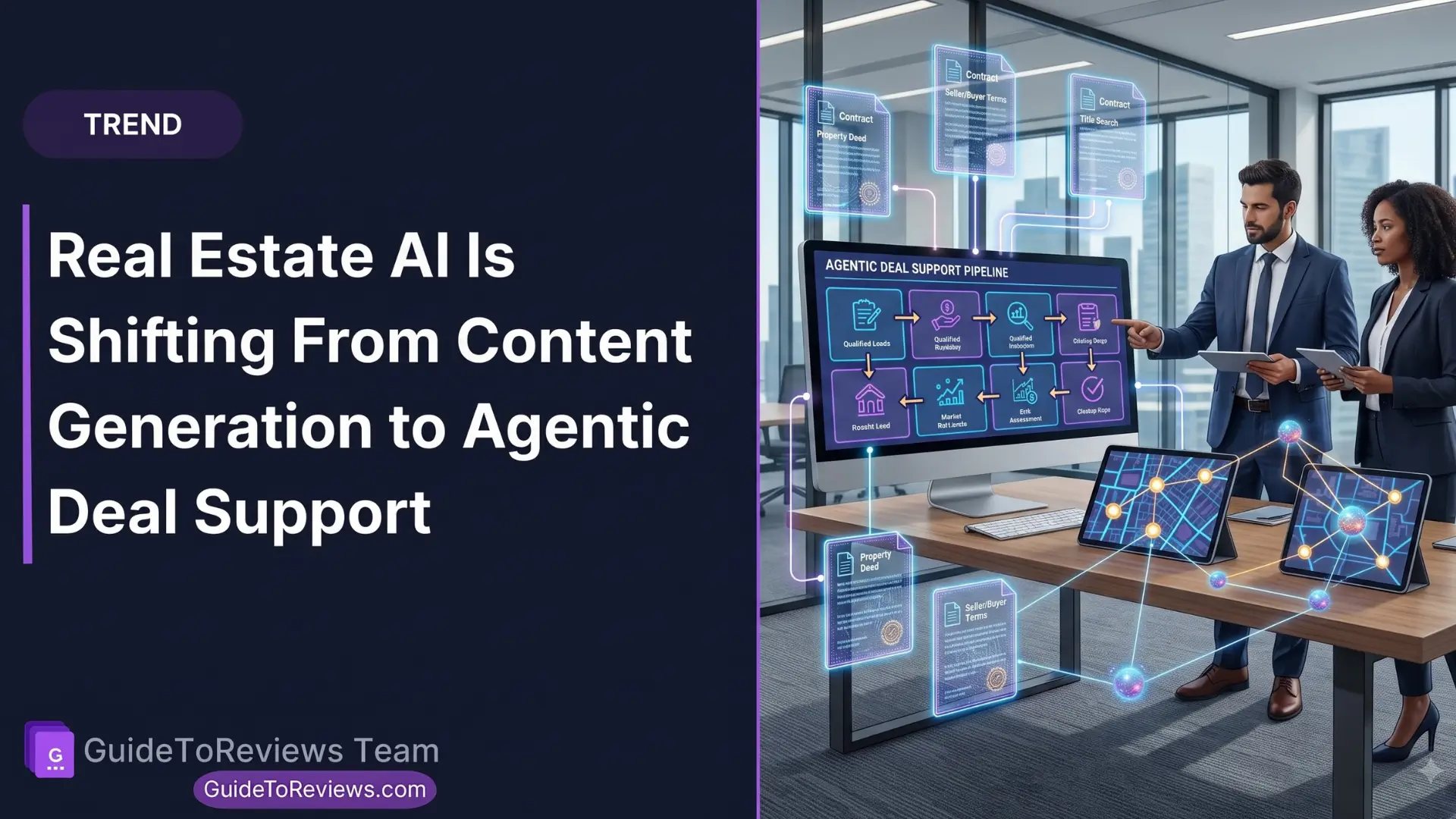
From Content Generation to Agentic Support
The first wave of AI in real estate was about content. Agents used tools like ChatGPT and Canva to draft listing descriptions, write follow-up emails, and generate social graphics.
That wave has crested.
2026 is being described as the year the market pivots from generative AI, tools that produce content when prompted, to agentic AI: systems that monitor an agent's business and act without being asked.
Adoption Isn't the Question Anymore
The National Association of Realtors' 2025 Technology Survey found 72% of agents now use AI daily, up from under 30% in 2023.
A January 2026 survey from Delta Media, covered by Inman, put the number even higher: 97% of brokerage leaders said their agents actively use AI in some form.
The question isn't whether agents use AI. It's what they expect it to do next.
Three Shifts Driving the Change
Lead qualification is going conversational. Static contact forms are being replaced by AI interviews that capture budget, timeline, and financing status in a prospect's own words, before a human ever calls.
Valuation tools are getting more data. Permit records, climate risk scores, and hyperlocal sales velocity now feed automated estimates, making them faster and, in many markets, more accurate than manual appraisals for standard homes.
Data access is becoming the differentiator. In April 2026, HouseCanary released a Model Context Protocol connector exposing valuations, rental estimates, and forecasts directly to AI agents. Tools are competing less on features now, more on the data they can reach.
What AI Still Can't Do
Every major analysis of this shift agrees on one thing: AI works as decision support, not a decision-maker.
An automated valuation model can summarize neighborhood trends and flag anomalies. It can't replace the local judgment a licensed agent brings to property condition, buyer psychology, or negotiation.
Fair housing compliance is also something regulators and brokerages are watching closely as AI takes on more client-facing work.
What To Actually Do With This
Stack two or three specialized tools across the funnel, lead capture, nurture, listing prep, transaction coordination, instead of hunting for one all-in-one platform.
The agents pulling ahead aren't using the most AI. They're using it earliest, at the highest-leverage point in their workflow: first-touch lead response.
Sources:
- National Association of Realtors, 2025 Technology Survey;
- Delta Media survey via Inman (January 2026);
- PwC, "Emerging Trends in Real Estate 2026".
Verified By
GuideToReviews Team
Need a custom AI tool recommendation?
Our AI Assistant tracks the latest mergers and updates to recommend the best tools for your specific workflow.