
Classroom AI Is Moving From Generic Chatbots to Purpose-Built Teaching Platforms
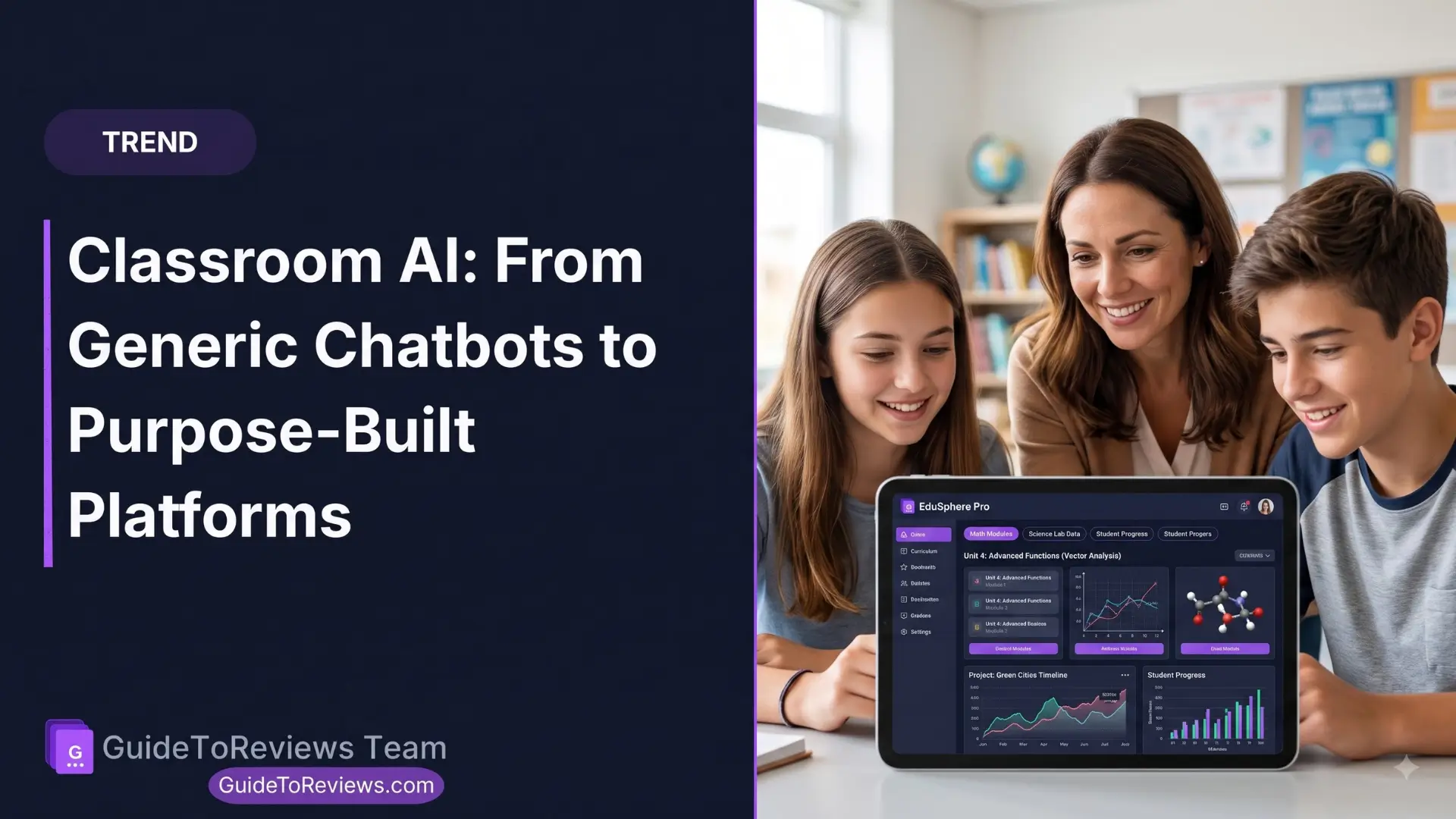
From Generic Chatbots to Purpose-Built Platforms
Early AI in education looked like experimentation. Teachers tried general chatbots for lesson ideas. Districts ran small pilots. Policymakers watched from the sidelines.
That phase is over.
2026's defining shift is a move away from generic AI tools toward platforms built specifically for classrooms, designed around curriculum standards and an actual teacher's workload, not adapted from consumer AI.
The Numbers Behind the Shift
Global AI-in-education market estimates vary, but they point the same direction: some projections put the market above $100 billion by the mid-2030s, up from roughly $7 billion in 2025.
More telling: teachers adopt AI tools fastest when a tool saves 5-10 hours of work per week without hurting instruction quality. That threshold, more than any feature list, predicts whether a school keeps using a tool past the pilot stage. Platforms like MagicSchool AI built their entire pitch around that number, packaging 80+ purpose-built tools into one login instead of a blank chatbot window.
Three Shifts Worth Watching
Grading is the biggest time-saver. Some tools now evaluate essays against a rubric in seconds. Dedicated graders like CoGrader integrate directly into Google Classroom so teachers never leave their existing workflow, and multiple teacher surveys cite meaningful weekly time savings from offloading this task alone.
Lesson planning is getting smarter inputs. Tools increasingly analyze curriculum standards and past student performance together, instead of generating generic content from a single prompt. Eduaide.ai, built by two former public school teachers, organizes over 100 resource types, rubrics, worksheets, discussion activities, into one workspace rather than dozens of separate generators.
In-document speed is becoming its own category. Rather than a separate platform, tools like Brisk Teaching work as a Chrome extension directly inside Google Docs and Slides, letting teachers level a passage or generate a quiz without switching tabs.
The Trust Problem Underneath It All
A CDT survey found most teachers worry AI weakens students' critical thinking. A notable share of students say they feel less connected to teachers when AI use is heavy in class.
That tension hasn't slowed adoption on the student side either. Tools like Quizlet AI have leaned into conversational, Socratic-style tutoring through their Q-Chat feature, aiming to hold a study dialogue rather than just serve up flashcards.
The Governance Gap
Usage is high. Guidance isn't.
Multiple 2026 surveys found fewer than half of teachers have received any structured training or institutional policy on AI use, even in schools where adoption is already widespread.
That gap, not the tools themselves, might be the bigger education story right now.
What Actually Works
Fit matters more than features. Tools built for general productivity demand extra prompting effort and fall out of use fast. Tools that integrate with existing curriculum and reduce setup work are the ones showing durable adoption through 2026.
The schools moving fastest are pairing new tools with real AI literacy training, for teachers and students both, instead of treating adoption as a purely technical rollout.
Sources: Center for Democracy and Technology, "Hand in Hand" survey; Faculty Focus and TeachBetter.ai 2026 education trend reporting; Precedence Research, AI in Education Market sizing.
Verified By
GuideToReviews Team
Need a custom AI tool recommendation?
Our AI Assistant tracks the latest mergers and updates to recommend the best tools for your specific workflow.